![]() |
Michael Treacy |
|
Michael Treacy Keynote Fee: $35,000 * *Fee Note Michael Treacy Travels From: MA |
|
Michael Treacy
Speaker Videos Dialup - Broadband Dialup - Broadband |
Michael Treacy has been helping companies achieve market leadership for more than 25 years. Treacys distinguished career has transformed businesses around the world by aiding senior management with their greatest strategic challenges.
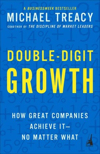
Treacys latest book, titled Double Digit Growth: How Great Companies Achieve it - No Matter What, presents a common sense approach for achieving superior profitable growth. It is based on eight years of research and consulting with companies of all sizes. It introduces the Growth Portfolio, a concept that is sure to become as widely adopted as his earlier work on customer value leadership. The Growth Portfolio decomposes the problem of growth into five distinct disciplines, each with its own opportunities and managerial challenges. Case examples detail the successes and failures of scores of companies as they manage through turbulent markets and apply the concepts detailed in this book. Treacy is currently the Chief Strategist and Co-Founder of GEN3 Partners, a professional services firm based in Boston and St. Petersburg, Russia, dedicated to creating science-based product breakthroughs for a wide range of clients.
The best-selling author of The Discipline of Market Leaders reveals how companies can achieve sustained growth.
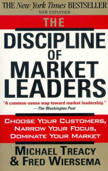
In their 1995 blockbuster The Discipline of Market Leaders , Michael Treacy and Fred Wiersema explained how great companies dominated their markets by offering superior value propositions. Now Treacy is back with an equally groundbreaking book-revealing how great companies master growth each year and how all businesses can identify and exploit opportunities for increased revenues, gross margins, and profits.
Treacy's main point is simple-it really is possible to grow your business by 10 percent or more, year after year, in good times and bad, without cheating. Great companies already know how to do it, and the rest of us can learn their strategies and do the same thing. Using case studies from industry leaders such as Dell Computer, Home Depot, and GE, he shows the five steps that are imperative to ensure growth:
keep the growth you have already earned
look for growth where it's likely to be found
take business from your competitors
Treacy believes that any business can grow at a consistent double-digit rate, and with Double-Digit Growth , managers and investors now have the tools to achieve that lofty goal and maintain corporate success.
Double Digit Growth
Growth, the lifeblood of industry, is the ability of a company to increase its revenues and profits by expanding its business-either by acquiring other companies, increasing its market share, or penetrating new or adjacent markets. Believing that many of the formulas for growth were wrong, incomplete or outdated, Michael Treacy set out five years ago to try to crack the growth conundrum. This speech will outline the principles and disciplines for making double-digit growth a reality in your company.
Companies that increase revenue significantly year in and year possess a rigorous
management process that aggressively seeks revenue increases in five fundamental areas:
Retention of existing customers.
Market share gains.
Market positioning exploitation.
Adjacent market entry.
New business investment.
Dr. Treacy demonstrates, through fresh and compelling case examples, that the foundation of steady double-digit growth is a discipline that can be developed by any management team. With a structured growth discipline, firms are more likely to achieve high growth by "grinding it out" than they are by "betting the farm" on risky strategies.
Customer Loyalty: Myths and Realities
Customers aren't loyal to suppliers. They're loyal to only one thing - best value. This topic focuses on the myth of customer loyalty and the realities of customer retention. While many corporations have invested in expensive loyalty reward programs, complicated customer relationship management schemes, and lots of loyalty consulting advice to attract and retain customers, the results have been marginal at best. To keep your customers and gain new ones, you must understand the advantages that incumbency bestows and how to use those advantages to create powerful value that wins the customers' business again and again.
Value Leadership: The Discipline of Market Leaders
Do you want to be the leader in your industry? Do you want to provide the best offering for your customers whether that is the best products, the best solution or the best total cost? Do you want to have the capability to offer your customers better value year after year? This session uses the principles of Treacy's co-authored best seller, The Discipline of Market Leaders. Translated into 18 languages, with about one million copies in print, this book revolutionized thinking about markets and competition. This session has revolutionary ideas about markets and competition, and introduces new terms such as value propositions" and "customer intimacy.
Growth Beyond the Core Business
Every company eventually looks to expand its growth horizons beyond its core market. Whether it's simply targeting faster growing market segments or acquiring a business in an entirely separate market, these moves bring new competition, added complexities, and unknown risks. Michael Treacy examines what it takes to grow successfully beyond a company's core market. Through case examples, youll gain practical insight into the challenges of growth in related markets. He dispels several myths about competitive advantage and humorously describes some of the all-time worst attempts to grow beyond core businesses.
Sales Excellence: Building a System for Growth
It takes a system to create a sale. Not just an energetic sales force, not just a valued product but an entire system - sales processes, performance information, roles and controls - is needed to create sales excellence. This session will discuss leading edge examples of sales effectiveness and draw out important implications for change within your sales system.
Systematic Product Breakthroughs
In markets crowded with "me-too" products it is more important than ever that product leaders aim higher for truly breakthrough products. Yet, this is a risky business. Only one in seven early stage product developments ever makes it to market. How can a company aim for bigger results from product research and development while simultaneously lowering the time and risk of innovation? What is the best method to determine the lifecycle of your current products and how do you predict the technology that will launch your products into their next lifespan? This remarkable session will answer that question
and discuss several companies that have revolutionized their product innovation efforts using a research methodology first developed in Russia. The revolution in product research and development has begun.
Successful Cross Selling
Many a company has set out to build growth by selling products and services from one division into the customer base of another division, only to be stymied by passive sales resistance and customer indifference. Why is cross-selling such a difficult tactic to implement in most organizations? Why arent sales organizations willing to exploit their knowledge of current accounts for further gain? And why arent our customers interested in buying the full complement of our offering? This session examines what it takes to grow and successfully implement a cross selling program.
Outsourcing and Offshoring - Myths and Realities
Outsourcing (when a firm contracts with an outside supplier for work) and offshoring (when a company moves domestic work overseas) are controversial and complex innovation strategies that are, nevertheless, gaining in appeal. The drive to maintain competitive parity is causing companies to seek focused and specialized suppliers that can perform internal tasks and processes with greater productivity and to re-evaluate where work best gets performed to meet the needs of increasingly demanding global markets. The opponents of outsourcing and offshoring maintain that these strategies will weaken domestic competitors in the long run and that jobs are being sacrificed for profits. Which view is correct? What should a prudent company do?
In this session, Michael Treacy looks at the actual impact of outsourcing and offshoring on jobs, company performance, and competitiveness. This presentation will, in part, draw on Mr. Treacy's personal experiences with offshoring. Dr. Treacy has built a firm that creates new product innovations for large American firms using science and technology sourced from Russia and Eastern Europe. So the debate is this: is this a company outsourcing and offshoring R&D jobs - or onshoring intellectual property that ultimately creates a multitude of new jobs? And which workers and firms are harmed and helped in the process? Many a myth will be shattered in this session with common sense analysis and straight talk.
Revolutionizing Product Innovation
In markets crowded with me-too products it is more important than ever that product leaders aim higher, for truly breakthrough products. Yet, only one in seven early stage product developments ever make it to market. How can a company grow product research and development while simultaneously lowering the time and risk of innovation? What is the best method to determine the lifecycle of your current products? How do you predict the technology that will launch your products into their next lifespan?
This remarkable session will answer these questions and discuss case examples of companies that have revolutionized their product innovation efforts. Mr. Treacy will draw on his experiences as a co-founder of GEN3 Partners, a product innovation firm based in Russia and the United States that works with a wide range of companies around the world on some of their most important product innovation challenges. Of GEN3s many innovations, perhaps the best-known was their work for Proctor and Gamble that yielded the creation of Crest Whitestrips®, the most successful new product launch P&G has ever had.
Sustaining Growth in a Changing Health Care Marketplace
Whether a provider of health care services, an insurer of health care costs, a manufacturer of health care products, or a service provider to those firms, expanding health care costs has provided plenty of growth in revenue and profits for everyone. But medical inflation has also laid the seeds for significant changes in the health care marketplace. Whether the health care marketplace ever becomes truly consumer-driven, whether employers completely shift health insurance from a defined benefit to a defined contribution, and whether the government is prepared to fully allow market forces to reshape health care delivery, are all open to debate. What is not debatable, though, is that this marketplace will continue to transform, in reaction to spiraling costs, at an accelerating rate.
Michael Treacy explores the challenges health care organizations face in order to sustain
and improve their growth performance:
They must proactively and effectively adapt their operating model to changing market conditions. As the basis of competition changes in a market, too often market leaders are stranded by their own historical competencies.
They must prepare to grow in flatter revenue markets. This will require a more disciplined approach to growth, akin to a disciplined approach to cost containment, which few health care organizations have mastered.
| Also see these top speakers: Tim Sanders | Jason Jennings | Erik Wahl | Patrick Lencioni | Mike Mullane | Keith Harrell Robert Stevenson | Amanda Gore | Mike Rayburn | Don Hutson | Terri Sjodin | Passing Zone | Marcus Buckingham | Ben Stein Scott Adams | Mike Eruzione | John Stossel | Al Franken | Mike Ditka | Ross Shafer | Steve Rizzo | Durwood Fincher Vince Papale | Afterburner Seminars | Ken Dychtwald | Jim Morris | Don Peppers | Tim Sanders | John Amatt | Todd Buchholz Frank Miles | Ken Blanchard | Keith Ferrazzi | Steve Bridges | Chuck Martin | Ram Charan | Roy Firestone | Peter Ricchiuti |