|
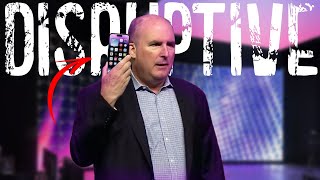
Jim Harris Keynote Speaker Fee: $12,500* *Click here for fee note Jim Harris Speaker Travels From: ON |
Jim Harris is a one of North America's foremost authors and thinkers on change and leadership. As a management consultant and best selling author he is much sought after. Association magazine ranked him as one of the nation's top speakers. As a management consultant Jim speaks internationally at over 50 conferences a year and conducts strategic planning sessions with executive teams, focusing on the most pressing issues: *Blindsided! *Leadership in the New Millennium *Customer Relationship Management *eLearning *Future Trends *Change, Creativity & Innovation *Creating Learning Organizations *Strategic planning amid complexity *Creating Common Mission/Vision *Teamwork Mr. Harris' clients include Agilent Technologies, Association of Research Libraries, Barclays Bank, Centra, Certified Management Accountants, Columbia Tristar Pictures, Deloitte & Touche, European Snack Food Association, General Motors, Glaxo Wellcome, IABC, IEEE, International Council of Shopping Centers, JD Edwards, Johnson & Johnson, MasterCard, Munich Re, NEC, Nortel Networks, Novartis, Pasteur Mérieux Connaught, Saba, Society of Professional Engineers, Sybase, TNT Worldwide Express, the UK Cabinet Office and Zurich. Mr. Harris' new book, Blindsided! is a #1 international bestseller having appeared on the Financial Times of London's #1 spot in its European edition. Blindsided! was named as one of the best business books of the year by CEO Refresher and numerous executive audio summary services have summarized the work. Blindsided! was published simultaneously in 80 countries worldwide in 2002 as a lead title of UK-based Capstone, part of John Wiley & Sons of New York. In October 2001 Polaroid declared bankruptcy. The company that came to define instant photography was blindsided by the rapid rise of digital photography. Blindsided! highlights why companies and even whole industries are being blindsided and then answers the questions: How can decision makers identify early warning signs? How can leaders put in place systems and structures that will prevent their organizations from being blindsided? And then knowing all this, how can you blindside your competition? Mr. Harris' second book, The Learning Paradox, was nominated for the National Business Book Award in Canada, and has appeared on numerous bestseller lists. Books for Business has ranked it as one of the top 10 business books in all of North America. Capstone published The Learning Paradox in 80 countries in February 2002. There are now over 40,000 copies in print, and Capstone will be releasing it in paperback in 2004. The Learning Paradox argues that job security, as we knew it is gone. Individual and organizational security is now based on learning, changing and coping with uncertainty. Paradoxically these are what we, as adults fear most! He also co-authored the national bestseller The 100 Best Companies to Work for in Canada – selling 50,000 copies. As a management consultant, Mr. Harris works with leading businesses, Fortune 500 companies, and organizations aspiring to join these ranks. From 1992-1996 he represented the Covey Leadership Center in Canada – teaching Dr. Stephen Covey's work, The Seven Habits of Highly Effective People to clients.
Solve problems before they happen. The speed of change is accelerating. It took radio twenty years to attract ten million users; it took television half that time, Netscape only twenty-eight months, Hotmail eighteen and Napster twelve. New technology, mergers, competition coming out of left field: all these factors mean the business landscape is more chaotic, confusing, and complex than ever before. Blindsided! presents a series of breakthrough techniques to help business leaders identify trends earlier and more accurately predict their impact. Drawing upon his extensive experience consulting the world's top corporations, global change guru Jim Harris demonstrates how to build consensus faster within organizations when the tumult of the market threatens to throw plans off course. Every executive dreads being blindsided; with this tool, leaders will learn to stay one step ahead of the game.
The Learning Paradox In the past, a secure job came from working for a large, established organization, preferably a monopoly or market leader in a stable industry. The longer your service, stronger your union, higher your rank or the more specialized your knowledge or function, the more secure you were. But in today's world, experience may be your worst enemy! Everything that used to create security now creates insecurity! In fact, large companies have been the largest net job losers in the '90s. And over 80 percent of the technology that we will use in 20 years hasn't been invented yet! Jim's bases both keynote addresses and seminars on his most recent book The Learning Paradox, which has sold more than 30 000 copies! Jim customizes each presentation, tailoring the lessons of The Learning Paradox to each client. The only way to prepare for the future is to learn how to learn. Become self-corrective and self-reflective. Increase your creativity and work better as a team member. We have moved from a knowledge-based to a learning-based economy. Learning, changing and accepting uncertainty creates security. Paradoxically, these are what we fear most as adults! The Learning Paradox will teach you not only how to survive business in the 90s, but how to thrive! Change Change is the key factor in today's economy. Today's consumers are more knowledgeable and are exercising their freedom of choice in the market. With consumers demanding value, and technology making it possible to serve needs faster and more economically, no wonder everything is in a state of flux! Every sector of our society is affected — governments at all levels, health care, business, not-for-profit organizations, social programs, arts and culture. There are no exemptions — the change is sweeping and dramatic. Jim understands change and what it means to business today. Jim works with organizations and helps them understand change how stability can be created. Security for individuals is based on becoming self-reflective and self-correcting. Similarly, security for organizations is based on putting in place processes that guarantee self-reflection and self-correction at the individual and organizational levels. Only the dynamic organizations that recognize change, and embrace it, will thrive in this ever-changing world. Creating a Common Mission/Vision Creating a shared mission/vision is a challenging, yet vitally necessary task for any organization. Would you build your dream home before you had designed the blueprints? Would you build your dream home with a construction crew that had no idea what the house was to look like? Of course not! In this ever changing world of business, it is crucial that your company has a clear mission/vision statement that reflects the company as a whole and serves as a corporate blueprint. While the mission (Why are we in business?) will tend to remain constant, the vision or direction (Where are we going?) will be continually changing over time. Jim knows that each organization is unique and researches the challenges and successes of each client. With his understanding of each company, and their industry, Jim intimately works with each group, helping them to consider the complex and dynamic opinions within their organization. Through his facilitation, many companies have successfully completed solid, reflective mission/vision statements. Strategic Planning Strategic planning in the past assumed that the future would look essentially the same as now, with an estimated 10 per cent growth rate. However, the rate of change has become so rapid that strategic planning today must recognize that the future will look radically different than the present and the past. In today's dynamic, changing market, strategic planning is a bit like trying to fly plane while building it. Here is a simple fact: 80 per cent of the technology that we will use in our day to day lives in only 20 years has not been invented yet. So, how can an organization plan for the future? The only way an organization can hope to grow and prepare for the future is by creating it! Companies must learn not to react to change, but to facilitate change, pushing established boundaries into new, unknown areas. Organizations must continuously compete against themselves and reinvent themselves to remain market leaders. Each session on strategic planning is customized to the client's company and industry. Jim works with the group and examines their successes, failures, and challenges. Most importantly, Jim works with executives to identify potential growth areas. What worked in the past, and what works today, does not guarantee success tomorrow. By demonstrating how strategic planning must be approached today, and by working with each client to flesh out individual challenges, Jim is able to lead his groups through the difficult and often daunting task of planning for the future. Paradigms/Paradigm Shifts Paradigms are the way we see the world. Columbus had a different paradigm of the world than the people of his day who belonged to The Flat Earth Society. Columbus' beliefs and actions flowed out of his paradigm. Change your paradigm and you change your world. Perhaps at no other time as it been so crucial for a company to be able to shift its paradigms and examine the possibilities! With our lives changing so quickly, every organization must be able to look outside the present way of doing things and contemplate different options. It is when we are most successful that we are most at risk of becoming complacent and ignoring potential risks and benefits of paradigm shifts. Each technological change can dramatically alter our lives and each innovation brings a future vision into reality. Companies who are not challenging their paradigms will be left behind. Jim works with organizations and not only identifies their paradigms and corporate culture, but works with the clients to illustrate how restraining and liberating such outlooks can be. It is challenge to maintain a common mission and be innovative enough to remain a competitor. Boundaries between industries are no longer clear, and companies need to be versatile and confident to compete in today's markets. Jim can help you do this! Customer Retention & Delight The key to corporate growth is customer retention. The way to retain clients is to delight them! It costs five times as much to attract a new customer than it costs to keep an existing one. The key to customer retention is customer satisfaction. We must define satisfaction from the customers' perspective, measure it, and change the organization to increase customer satisfaction. Technology has provided the consumer with limitless options. With online sales booming, and industrial boundaries blurred, can a company feel confident that its client base is secure? No! Companies must fiercely protect its customer base by proactively working to provide the best value possible to its clients. This no longer means simply monitoring your main competitors' service -- there is a good chance that you have not yet seen your next main competitor! Successful businesses anticipate and exceed the needs of their customers and focus on customer delight. Jim works with companies to survey their customer satisfaction and identify ways to improve it. More importantly, Jim works with executives to look at how new technology can be used to streamline the service/product they provide, and build new, better relationships with customers, suppliers and employees. If a company is actively working to increase the value it provides to its customers, it will not have to worry about customer desertion and indeed can look forward to new clients. Communication Effective communication has never been more important for businesses. In an empowered organization, everyone has a role to play in creating an exciting and compelling vision of the future. In most organizations, if there is loss of market share, what is the typical response? Downsize. Using an analogy of a supertanker, this would be equivalent to firing all the engineers on the ship. The organization still has the same problem but fewer people to cope with the workload. Good communication allows companies to maximize their resources and work together to solve problems and create new opportunities. Jim has helped many organizations re-evaluate traditional power structures and ensure communication lines are open. Good communication means a company is putting all its energy into moving forward and addressing challenges, rather than wasting time and stagnating. Leadership Leaders today are paradigm pioneers who must understand the versatility of business and change with it. In the world of shifting paradigms, leadership has become more complex and more necessary. One of the greatest challenges of leadership has become problem-seeing, not problem-solving. Leaders have to become more adept at anticipating problems and perceiving opportunities to stay ahead of the competition and exceed customer expectations. Jim works with business leaders and teaches them to continuously question their products and methodology, and explore the new realms. Continually questioning helps individuals and organizations to deepen their understanding of potential market shifts, helping the organization to pioneer new paradigms, and avoid complacency. Security for organizations is based on putting in place processes that guarantee self-reflection and self-correction at the individual and organizational levels. Only strong leadership can do this. Information Technology Radical advances in information technology (IT) are fundamentally changing the way companies do business. The scope and depth of the changes wrought by IT are profoundly revolutionary. IT has become the central nervous system of business. Organizations that fail to make the transition to the new IT paradigm will cease to exist. Information technology on its own does not give an organization an advantage. Individuals and corporations need to continually ask, "What are the 'impossible' things that are holding us back from dramatic performance improvements, both personally and organizationally? The goal of creativity working with IT is to make the "impossible" a reality. It today's world, anything is possible. Jim works intimately with organizations and helps them evaluate what IT can do for them. Each organization's IT structure should be unique, fast, flexible, focused and friendly. Organizations from all aspects of society are using IT to dynamically change their methods of operation, and thus cut costs, increase the value to their customers, and thus be, regardless of their size, an industry competitor.
Also see these top keynote speakers from Speak Inc. speakers bureau:Dara Torres | Phil Jackson | Ram Charan | Cam Marston | Marcus Buckingham | Archie Manning | Terry Savage | Mark Victor Hansen | Richard Branson | Mike Mullane | Jason Jennings | Erik Wahl | Patrick Lencioni | Mike Mullane | Robert Stevenson | Amanda Gore | Mike Rayburn | Don Hutson | Terri Sjodin | Passing Zone | Marcus Buckingham | Ben Stein | Scott Adams | Mike Eruzione | John Stossel | Al Franken | Mike Ditka | Ross Shafer | Steve Rizzo | Durwood Fincher | Vince Papale | Afterburner Seminars | Ken Dychtwald | Jim Morris | Don Peppers | Tim Sanders | John Amatt | Todd Buchholz | Frank Miles | Ken Blanchard | Keith Ferrazzi | Steve Bridges | Chuck Martin | Ram Charan | Roy Firestone | Peter Ricchiuti |