|
David DeLong Keynote Speaker Fee: Please contact Speak Inc. for a quote. David DeLong Speaker Travels From: MA |
Dr. David DeLong is president of David DeLong & Associates, a consulting firm that helps organizations improve performance by solving problems created by changing workforce demographics and risks of knowledge loss. He is also a research fellow at the MIT AgeLab and has been an adjunct professor at Babson College.
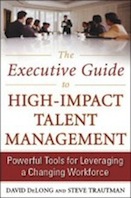
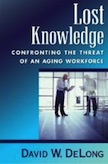
An acclaimed keynote speaker, Dr. DeLong is co-author of the new book The Executive Guide to High-Impact Talent Management from McGraw-Hill. He is also author of the widely praised Lost Knowledge: Confronting the Threat of an Aging Workforce from Oxford University Press. He has spent more than a decade studying the strategic impacts of changing workforce demographics and knowledge loss on organizational performance. In recent years, he has conducted over 600 interviews with scores of knowledge-intensive organizations to develop solutions for the knowledge retention and workforce development challenges posed by increased baby boomer retirements and greater mid-career turnover.
His work has been widely cited in the New York Times, Fortune Magazine, Wall Street Journal, Financial Times, CIO Magazine, U.S. News & World Report, and the Boston Globe. He has also been interviewed on NPR`s "Morning Edition" and "Talk of the Nation."
A former researcher at both Harvard Business School and MIT`s Sloan School, Dr. DeLong was also co-author (with J.F. Rockart) of Executive Support Systems: The Emergence of Top Management Computer Use. He has lectured in the U.S., Europe, Australia, and South America, and is a widely published writer whose work has appeared in journals and magazines such as Harvard Business Review, New York Times, Boston Globe, Newsweek International, Organizational Dynamics, Computerworld, and Inc. Magazine. He has a doctorate in organizational behavior from Boston University and an M.P.A. from Harvard`s Kennedy School of Government.
The Executive Guide to High-Impact Talent Management
Organizations today need top executives who know how to lead strategic talent management efforts that maximize the performance of a dramatically changing workforce. No matter what you call the problems of recruiting, developing, and retaining great people, the challenges of talent management are well known throughout organizations today. Most executives recognize the importance of developing and sustaining a workforce and leadership team to support their strategy. They also know that the talent pool is changing. More and more baby boomers are retiring, and highly qualified mid-career leaders and technical talent are becoming harder to find. In addition, those new to the workforce definitely have different work styles and expectations about using technology on the job. If you`re an executive, you`ve heard all this before.
You also have heard from your human resources (HR) department or your talent management staff about all the investments the organization has made -- or needs to make -- to support the development of your workforce. There are some pretty sophisticated "best practices" out there now that can make hiring more efficient, accelerate onboarding and leadership development, improve performance management, and increase retention of highly engaged employees. In fact, talent management programs and their related IT systems have become big business. So what`s the problem?
The problem is, if you`re a leader outside of HR, you most likely have a nagging feeling that your organization isn`t getting its money`s worth when it comes to talent management. Sure, the organization is spending a lot on its "people processes," but are those processes delivering what they`re supposed to?
Building Tomorrow`s Workforce in Today`s Economy: Creating a Framework for Action
Leaders can no longer afford to be complacent about talent shortages. Have you identified and prioritized your potential talent risks?
In this presentation, David shares research and proven solutions to jump start your talent management practices. To more effectively recruit, develop and retain high potential talent. To leverage your veteran workforce and to accelerate leadership development.
Reloading Your Talent Pipeline: Accelerating Leadership Development to Drive Growth
Is your organization`s talent pool dangerously thin? New hires should be in the pipeline now to take over future high-skill jobs and leadership roles.
In this presentation, David shares five secrets of how to accelerate the development of the next generation of leaders. These practical solutions will have immediate impact on your talent readiness.
Showing HR Where to Go: How to Lead Talent Management From the Top
How can leaders have an immediate impact on their organization`s talent management efforts? Drawing on recent interviews with over 70 senior executives, participants will learn how to prioritize talent-related risks, evaluate current and potential investments, drive more integrated solutions, and measure results more effectively.
The High Cost of Coming and Going: Accelerating Knowledge Transfer Across Generations
More Baby Boomer retirements and onboarding of new hires greatly increases the organizational costs of lower productivity, lost knowledge, and failed promotions. This presentation teaches managers how to reduce the risks of ineffective transitions, disillusioned young employees, and critical capability loss as many organizations go through seismic shifts in the make up of their workforce.
Making Innovative Talent Management Solutions Pay Off For Your Organization
Every year companies invest millions of dollars developing leadership and workforce capabilities, but with only marginal returns. This presentation describes the most innovative programs we`ve found to improve talent management from organizations like Microsoft, Cisco, Wespac Bank, Pfizer Pharmaceuticals, P&G, and a hospital in North Carolina. It also teaches leaders how to apply five critical success factors to implement successful talent initiatives.
Buddy, Can You Spare a Job? The New Realities of the Job Market for Aging Baby Boomers
Millions of Baby Boomers, who are healthier than previous generations, want and need to work longer. One survey before the recent recession reported 77% of today`s workers expect to work for pay even after they retire. But beyond the slow economy there are seven false assumptions that keep older job seekers unemployed. Based on 50 interviews with leading experts, this talk shows everyone who is likely to stay in the workforce longer than their parents how to succeed in the new market for talent.
Confronting the Threat of a Changing Workforce: A Framework for Action
The changing workforce -- aging boomers, restless mid-careers, and unpredictable Millennials -- poses a serious challenge for improving performance in organizations. What should HR executives be doing today to invest in leadership, workforce development, and knowledge retention initiatives that support strategic business objectives? This talk provides frameworks and tools needed to sustain a highly-skilled workforce in an era of -- major demographic and economic change.
Accelerating Leadership Development: Lessons From the Leading Edge
This interactive session will give participants frameworks and techniques for accelerating the development of their own and other`s leadership skills. Issues such as increasing leadership capacity, avoiding burnout, and raising the visibility of high potentials will all be addressed.
Also see these top keynote speakers from Speak Inc. speakers bureau:Phil Jackson | Ram Charan | Dara Torres | Archie Manning | Mark Victor Hansen | Marcus Buckingham | Alfredo Quinones | Bertice Berry | Bruce Jenner | Mehmet Oz | Jason Jennings | Erik Wahl | Patrick Lencioni | Mike Mullane | Robert Stevenson | Amanda Gore | Mike Rayburn | Don Hutson | Terri Sjodin | Passing Zone | Marcus Buckingham | Ben Stein | Scott Adams | Mike Eruzione | John Stossel | Al Franken | Mike Ditka | Ross Shafer | Steve Rizzo | Durwood Fincher | Vince Papale | Afterburner Seminars | Ken Dychtwald | Jim Morris | Don Peppers | Tim Sanders | John Amatt | Todd Buchholz | Frank Miles | Ken Blanchard | Keith Ferrazzi | Steve Bridges | Chuck Martin | Ram Charan | Roy Firestone | Peter Ricchiuti |